

Beltane
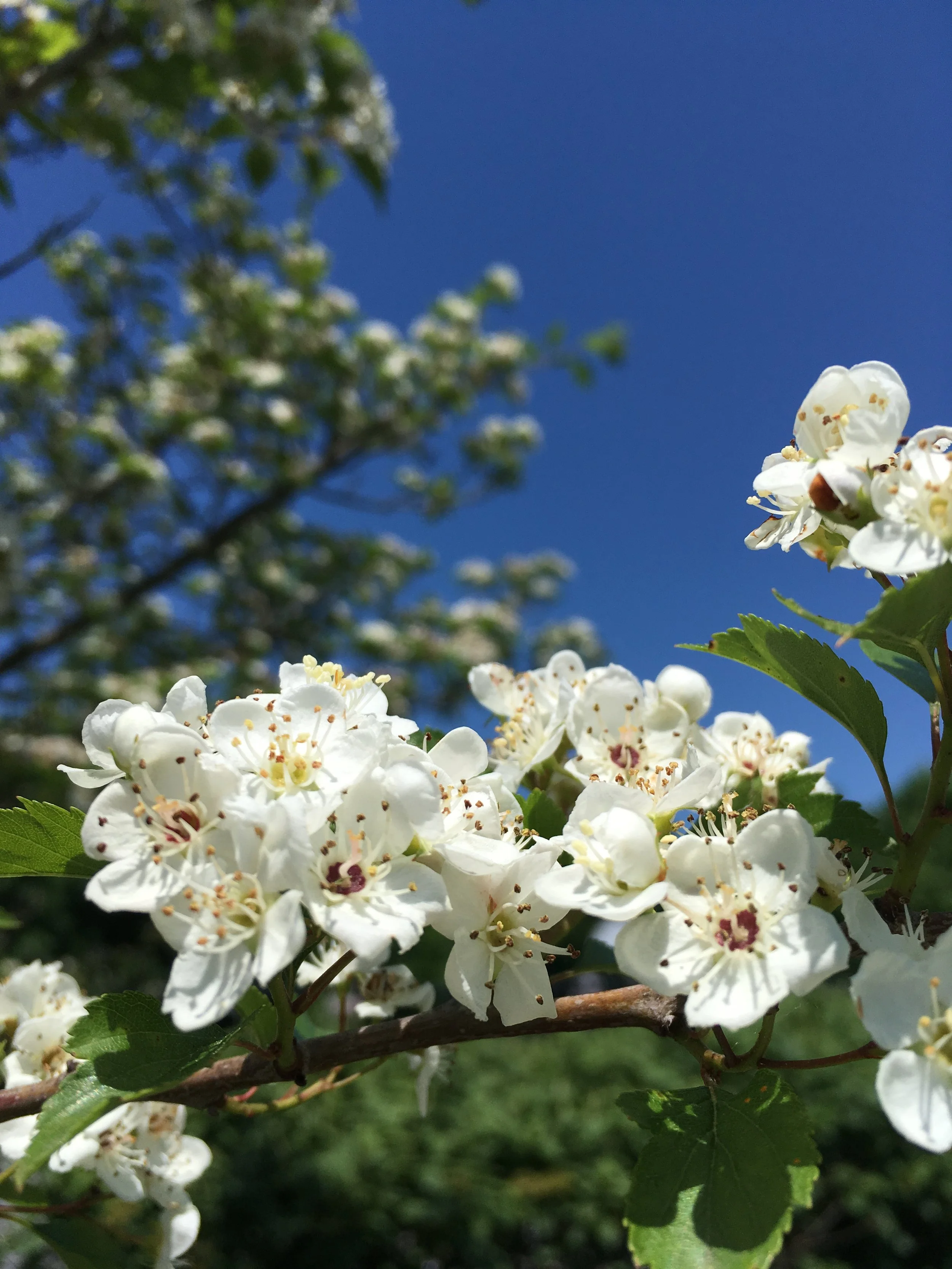
Hawthorn (Crataegus spp.) which blooms in May.
Beltane is one of four fire festivals that mark out the Wheel of the Year. It’s a celebration of the strengthening sun, the arrival of summer, the quickening of seeds, and the fertility of the blossoming earth. Bonfires were lit on the hillsides and fields, and their smoke was considered cleansing and sacred. Hearth fires were extinguished and relit from these flames to bring blessing and protection to a house and its inhabitants.
Why this focus on fire? It all comes down to the fact that our ancestors were really paying a lot of attention to the sun and where it was in the sky and what effect that had on the seasons and the growing things. They understood that without the lifegiving power of our closest star, we would not exist. The fire festivals mark major turning points in the sun’s journey: the first hints of its quickening at Imbolc, the arrival of its full power at Beltane, the noticeable shortening of the days and the start of its slow loss of strength at Lughnasadh, and the descent into the darkness of winter at Samhain.
The fires we light on these days are in honor of the sun, our own small answer to its stunning blaze. It’s our way of acknowledging that light and warmth is our lifeforce, that at the center of everything is a spark. It is alive, we are alive. We answer fire with fire.
You’ll often read in descriptions of Beltane that it was the time of year when cattle would be driven up to higher ground, marched between two great hot blazing bonfires to the summer fields. Cattle were incredibly important to the Celts, as their economy was largely built on the trade and ownership of them. As you can imagine, keeping the herd safe and well was therefore a major preoccupation; they were walked through the sacred smoke of the bonfires to protect them from Otherworldly trouble.
You see, the Otherworld comes just as close at Beltane as it does at Samhain. These are thin-times, thresholds. Beltane is a transition point when seasons bleed into each other and we move firmly from the dormant half of the year to the abundant. The veil that obscures this world from the Other is thinner than normal.
When considering why the Celts were keen to avoid mischief (or worse) from this brush with the Otherworld, it’s helpful to understand the nature of the place and the beings that live there.
The Otherworld is as real a place as this one, and exists as another layer of reality. It’s just out of sight, glimmering at the edge of what we humans can perceive. Things there are slightly offset; time flows differently, and our seasons and sunrises don’t always match up. Years may pass here and minutes there, or at times the opposite. You aren’t always guaranteed a return, and if you do make it back, you may not recognize the place you left.
Though the Otherworld is sometimes called the Land of the Living, a bright and beautiful place where the Tuatha Dé walk on white sand and along green sunlit hills, there are also things there that are dangerously indifferent to us. And some, maybe, who enjoy a little interference for their own entertainment.
Protection from any Otherworldly games and tricks is a necessity at this time of year when moving between worlds is easiest.
The tradition of lighting bonfires has carried itself all the way down to us today, and though most of us modern Celts don’t have cattle to cleanse in the sacred smoke, we do mark this time by lighting our own small fires (or even candles) and celebrating the arrival of warm sunny days and green leaves.
I’ll be celebrating by gathering tender nettles and chickweed and dandelion, visiting the hawthorn trees, sinking into gratitude for the return of the green and growing things. And, maybe, by musing on what fires I want to ignite in myself.
Be well, and stay of out of trouble,
- Ali